Russian River Riverfront Due Diligence Essentials
April 2, 2026
April 2, 2026
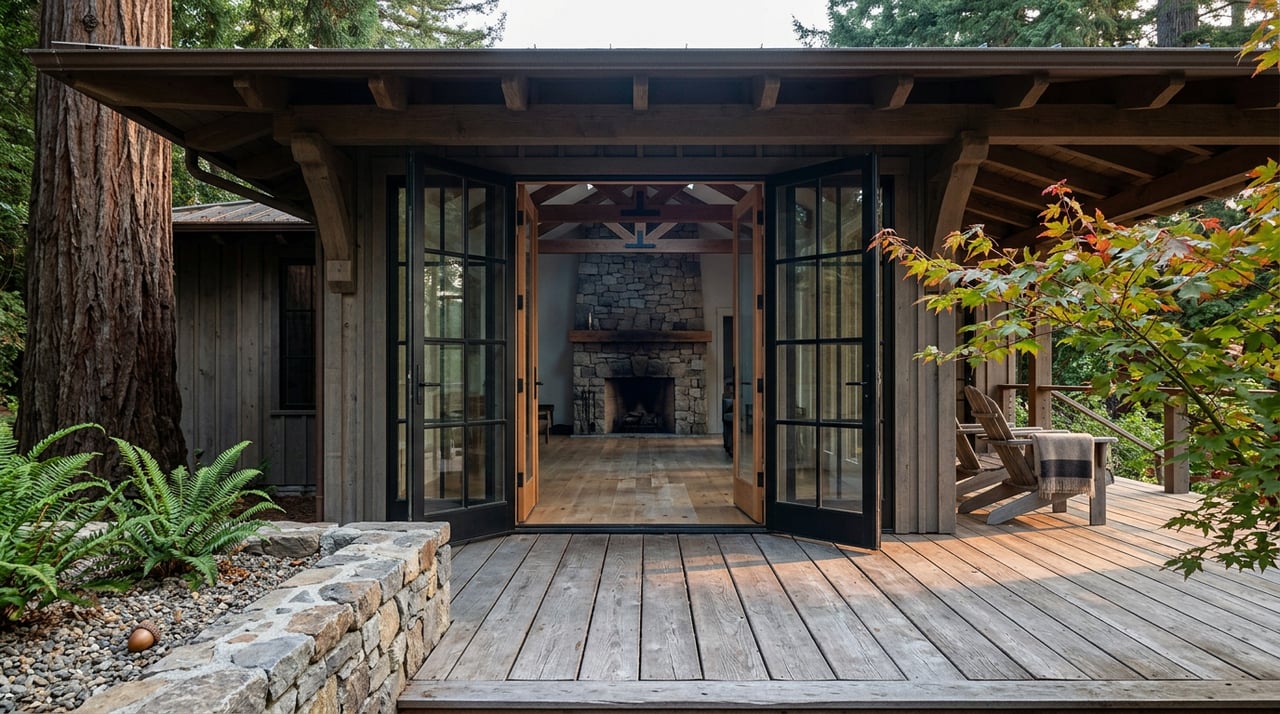
A Russian River property can feel effortless at first glance: filtered light through redwoods, a deck above the trees, and the quiet pull of a place made for weekends or longer stays. But when you buy along this corridor, the real questions often sit below the surface. You need to know whether the parcel can be insured, whether access works year-round, and whether the septic system supports how you plan to use the home. This is where careful due diligence protects both your lifestyle and your investment. Let’s dive in.
In the 95462 area and nearby stretches of unincorporated Sonoma County, buying near the river is rarely just about finishes, views, or even general property condition. It is also about flood status, streamside rules, emergency access, and wastewater capacity. These are not side issues. They can shape financing, future improvements, and day-to-day ownership.
The most important starting point is the parcel itself. According to the official FEMA Flood Map Service Center, properties in mapped high-risk areas may fall within zones tied to a 1% annual chance of flooding. Sonoma County also allows property owners and buyers to request flood-zone determinations through Permit Sonoma for county properties.
Flood risk is often treated like an insurance line item, but it reaches much further than that. It can affect lending, repair costs, and what you may be allowed to build or rebuild over time. If a home is in a higher-risk mapped area, a lender may require flood insurance, and that coverage is separate from standard homeowners insurance.
The California Department of Insurance states that ordinary homeowners policies do not usually cover flood damage. It also notes that flood coverage may be available through the National Flood Insurance Program or private insurers, and that policies generally take effect 30 days after purchase unless a home purchase tied to a lender requirement creates an exception.
Sonoma County uses specific floodplain districts that can change what is feasible on a site. Permit Sonoma explains that the F2 Floodplain combining district applies to properties in the 100-year flood hazard area shown on FEMA maps. It also states that construction is prohibited in the F1 Floodway district, while projects in F2 areas are subject to added construction and design standards.
That means your flood review should answer more than, “Has the house ever flooded?” You also want to know how the parcel is mapped today, whether the site falls in F1 or F2, and what those rules may mean for repairs, additions, or redevelopment.
Riverfront and near-river properties often come with another layer of review: riparian corridor regulations. These rules are meant to protect water quality, flood function, habitat, and groundwater recharge. In practice, they can affect what you can clear, grade, or build near the river or streamside areas.
Permit Sonoma explains that riparian corridors serve important environmental and flood-protection functions. County General Plan policy materials referenced there describe a 200-foot streamside conservation area for the Russian River riparian corridor, measured from the top of the higher bank.
For buyers, this matters because work that seems routine may trigger county review. Sonoma County code says that clearing vegetation, grading, excavation, fill, or construction in a sensitive area or riparian corridor can require a use permit, as reflected in the county code provisions.
Permit Sonoma’s Grading, Drainage, & Storm Water program also reviews permits in unincorporated Sonoma County to help ensure construction and grading do not cause flooding. The county’s guidance adds that property owners must prevent erosion and sediment discharge, and failures can violate county code, the California Water Code, and the Clean Water Act.
If you are thinking about expanding a pad, reworking a driveway, adding retaining walls, or changing drainage near a slope or shoreline, it is wise to treat that as a permitting question early, not just a contractor question.
A Russian River property may feel private in the best possible way, but privacy should never come at the expense of reliable access. The test is not whether you can reach the home on a sunny afternoon. The real test is whether guests, service providers, and emergency responders can get there consistently and safely.
Permit Sonoma states that roads serving two or more residences or businesses must be named, and that site plans must show access-road widths, turnaround areas, and gate placement. Gates must be set back at least 30 feet from the road.
Steep or narrow approaches deserve close attention. Sonoma County Fire Safe Standards state that no road or driveway may exceed a 15% maximum grade without approval from the County Fire Chief, according to the county’s maximum grade bulletin. The same standards allow the fire code official to require more than one fire apparatus access road if a single road could be impaired.
For a buyer, this turns access into a practical and legal question. You will want to confirm recorded access rights, understand private-road maintenance obligations, and evaluate whether the route remains usable across wet weather and emergency conditions.
Bridges are one of the most important diligence items on river properties. Sonoma County states that private roadway and driveway bridges must be designed, constructed, and maintained to applicable standards. Existing private bridges must be evaluated by a licensed civil or structural engineer, load limits must be posted, and one-lane bridges must provide at least 12 feet of unobstructed width plus turnouts at both ends.
That is why a bridge should never be treated as a charming detail. It is a core part of the property’s function and safety. If the home relies on one, ask for engineering records, maintenance information, and any posted load documentation as early as possible.
Many Russian River homes rely on onsite wastewater treatment systems, and that makes septic review a central part of the purchase process. This is especially important with older cabins, modest original structures, or homes that have been updated over time.
Permit Sonoma states that Sonoma County’s OWTS rules govern permit approval, installation, and operation of onsite wastewater systems in unincorporated areas. The county also says that unless a system is failing or creating a public health hazard, it generally cannot require an owner to upgrade it. But new development or added development is reviewed under the current manual’s requirements.
This distinction matters. A small legacy cabin may function today under an older approval path, but your plan to enlarge it, add bedrooms, or intensify use may trigger current septic review. In other words, what exists today and what you hope to do tomorrow may be treated very differently.
That is why buyers should review septic history before assuming future flexibility. A home that works well as-is may still face limits on expansion if the system, site layout, or reserve area does not support the intended change.
For non-standard systems, Sonoma County’s Operational Permit and Monitoring Program requires owner self-monitoring in March and October. Permit Sonoma also advises owners and buyers to search permit history by address or parcel number and to request both the main file and the OPR file.
Those records may reveal whether the system is standard or non-standard, whether ongoing monitoring applies, and whether there is a designated reserve area for future sewage disposal. County conditions of approval can require that reserve area remain free of buildings, roads, easements, ponds, wells, parking lots, and other encumbrances unless an alternate area is approved, as shown in this Sonoma County conditions document.
If you are considering a purchase along the Russian River, these are the questions worth answering before you remove contingencies:
The appeal of the Russian River is easy to understand. The landscape is beautiful, the setting feels tucked away, and many homes offer a rare mix of privacy and personality. Still, the strongest purchase decisions here are grounded in feasibility.
Before you move forward, make sure you can answer three practical questions with confidence: Can the parcel be insured and used as intended? Can emergency vehicles and service access reach it reliably? Can the septic system support the property’s current and future use? Those are the issues that help define whether a river property is simply appealing or truly workable.
If you are weighing a purchase in Sonoma’s river corridor and want a measured, property-specific diligence lens, Jamie Spratling offers discreet, high-touch guidance for complex Wine Country acquisitions.
Stay up to date on the latest real estate trends.