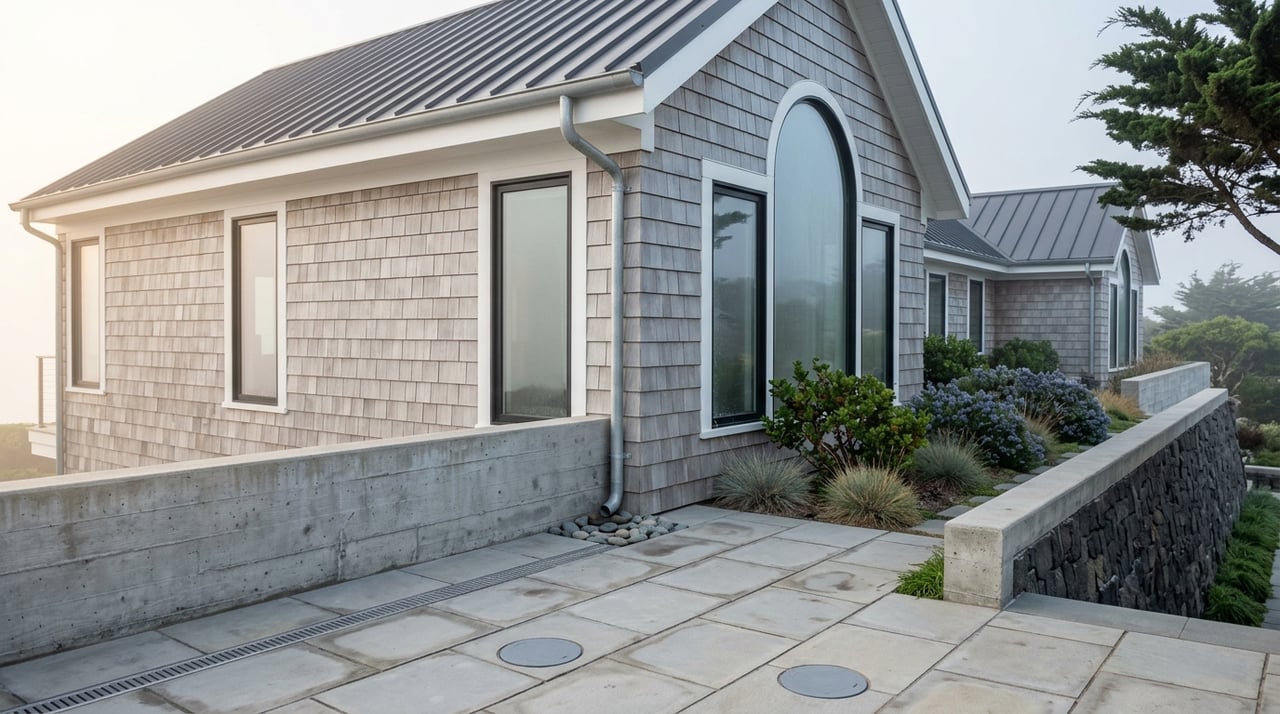
Jenner Coastal Property Guide: Permits, Bluffs, and Utilities
April 16, 2026
April 16, 2026
A coastal view in Jenner can feel unforgettable from the moment you arrive. But if you are thinking about buying or improving property here, the view is only part of the story. In this stretch of Sonoma Coast, bluff conditions, utility limits, and coastal permitting can shape what you can build, remodel, or preserve over time. This guide will help you understand the key issues so you can move forward with more clarity. Let’s dive in.
Jenner sits at the mouth of the Russian River along the Sonoma Coast, where ocean, estuary, and bluff landscapes come together in a highly visible and carefully regulated setting. Sonoma County parks materials note that the Russian River runs through Sonoma County to Jenner, and state wildlife materials place marine managed areas near the river mouth by Jenner Beach. Permit Sonoma also describes Jenner as a historic second-home subdivision dating to 1914, with growth constrained by water-system connections and limited septic area on small lots.
This setting is part of Jenner’s appeal, but it also explains why property ownership here often involves more review than buyers expect. Permit Sonoma notes that Jenner is especially visible from Highway 1, so scale, design, and landscaping matter even though the community does not have its own separate design guidelines.
If you are considering a purchase, one of the first questions is whether the parcel sits in the Coastal Zone and carries coastal zoning. According to Permit Sonoma’s coastal permit guidance, coastal permits are required for development on parcels in the Coastal Zone with CC zoning.
That matters because the permit path can affect timeline, cost, and project scope. Sonoma County says coastal permits may be processed administratively or through a public hearing, usually by the Board of Zoning Adjustments, and applications include public notice to nearby neighbors and people who have requested notice.
For many buyers, the surprise is that even a residential project may not be simple. The county identifies residences on the east side of Highway 1 and homes within established communities as common examples of administrative review, but that does not mean every remodel will move through quickly or without added questions.
Sonoma County says its Local Coastal Plan was certified in November 2024, and the county’s Coastal Zone extends from roughly half a mile to five miles inland from the coast. After certification, local governments issue most coastal development permits under the Local Coastal Plan.
Still, the California Coastal Commission keeps continuing appeal jurisdiction and direct jurisdiction over tidelands, submerged lands, and public-trust lands. For an owner near the shoreline or the Russian River mouth, that can make jurisdiction more layered than a typical inland property review.
If a property is close to the river mouth, shoreline edge, or land tied to public-trust concerns, the review may go beyond a standard county process. The California Coastal Commission notes that it retains jurisdiction over tidelands, submerged lands, and public-trust lands even after local coastal certification.
In practical terms, this means buyers should confirm jurisdiction early rather than assuming a standard remodel or site improvement will follow a familiar path. In Jenner, that early check can prevent expensive redesigns later.
Bluff-top and bluff-adjacent properties can offer dramatic outlooks, but they also require a more measured form of due diligence. The California Coastal Act guidance on sea level rise and hazards states that scenic and visual qualities are a resource of public importance, while new development must minimize risks in areas of high geologic hazard, maintain stability, and avoid creating the need for shoreline protective devices that would substantially alter bluffs and cliffs.
That policy has real effects on ownership. A beautiful bluff parcel may not support the same building footprint, expansion plan, or future protection strategy that a buyer first imagines.
For bluff development, setbacks are usually tied to more than a simple rear-yard rule. The Coastal Commission’s landform guidance for bluff and cliff development says geologic investigations and reports should be required, and setback decisions should consider long-term bluff retreat, slope stability, and site-specific conditions.
That means a survey alone is not enough. In many cases, an engineering geologist or geotechnical engineer becomes part of the due-diligence team before a project can be responsibly evaluated.
One of the most important realities for coastal buyers is that approval does not always come with a promise that future shoreline armoring will be allowed. Coastal Commission decisions on bluff-top homes often condition approval so an owner accepts the risk and does not rely on future shoreline protection.
For you as a buyer, this is a long-term ownership issue, not just a permit issue. It affects how you think about improvements, insurance conversations, and the overall resilience of the property over time.
In Jenner, utility constraints are often just as important as views or lot size. Permit Sonoma’s coastal-community materials say development has been constrained by water-system connection limits and limited area for septic systems on small lots. Sonoma County Public Infrastructure also administers water service to Jenner and has announced upgrades to the Jenner-by-the-Sea water system.
This is why water source and wastewater capacity should be treated as core diligence items from the start. A property may appear to have room for an addition, guest area, or reconfigured floor plan, but utility constraints can narrow those options.
Permit Sonoma’s well and septic guidance notes that many residences in unincorporated Sonoma County rely on well and septic systems. The county also states that the number of additional bedrooms a property can support depends on water availability and waste-system capacity.
For buyers and owners, that is a practical point with financial consequences. If your plan includes expanding living area or adding sleeping space, utility capacity may become the true limiting factor long before zoning envelope or design preference does.
The same county guidance says that properties with wells may require dry-weather well testing when building a new or replacement dwelling in Class 4 areas. That does not apply to every parcel, but it is another reason to confirm site conditions and utility requirements before plans become fixed.
In a market like Jenner, utility diligence is not busywork. It is part of understanding the property’s real usable potential.
Many coastal buyers assume review mainly applies to new construction. In Jenner, significant exterior remodels can also draw attention. Permit Sonoma says its Design Review Committee reviews significant new development and considers building and site design, architecture, colors, lighting, signs, and landscaping.
Its design-review guidance also says projects involving significant changes or additions to existing buildings generally do not qualify for Administrative Design Review and are instead reviewed by the committee. Because Jenner is so visible from Highway 1, exterior-heavy remodels may receive more scrutiny than similar projects inland.
If you are buying a home with plans to rework the exterior, expand square footage, or materially change the site, it is wise to ask early how the project is likely to be reviewed. That includes whether it may be handled administratively, require a hearing, or be referred to the Design Review Committee.
Even when the home itself seems straightforward, the visibility of the site and the coastal context can shape the review path.
Before you close on a coastal property in Jenner, it helps to approach the process with a clear checklist:
These steps may sound technical, but they help translate a beautiful coastal address into a realistic ownership plan.
The best way to think about owning property in Jenner is as a form of stewardship. The setting is rare, but it comes with systems and rules designed to protect public coastal resources, address geologic risk, and reduce pressure for future shoreline armoring. At the same time, water and septic limits mean that ownership often involves ongoing attention to infrastructure, not just a one-time permit review.
For many buyers, that balance is part of the appeal. A Jenner property can offer striking landscape, privacy, and a strong sense of place, but the smartest purchase is the one that matches the site’s long-term realities as closely as it matches your vision.
If you are evaluating a coastal home, bluff parcel, or design-sensitive remodel in Sonoma’s coastal corridor, Jamie Spratling offers discreet, high-touch guidance shaped by the complexities of distinctive Northern California property.
Stay up to date on the latest real estate trends.