From City Condo To Cloverdale Acreage: A Practical Buyer’s Guide
May 14, 2026
May 14, 2026
Trading a city condo for Cloverdale acreage can feel like stepping into a different kind of ownership entirely. Instead of HOA rules and shared systems, you are evaluating wells, septic capacity, fire access, and the practical shape of the land itself. If you are thinking about a country property in Cloverdale, this guide will help you focus on the details that matter most before you write an offer. Let’s dive in.
Acreage listings often highlight total land size, but gross acreage does not tell you how usable a property will be. In Sonoma County, parcel records can reveal whether the property is in the City of Cloverdale or unincorporated county, along with zoning, land use, groundwater availability, and mapped hazards.
That distinction matters because the rules can change with jurisdiction. Sonoma County’s parcel tools also make clear that assessor maps are used for assessment purposes and do not prove legal lot status. In other words, you should not assume that the acreage shown in a listing equals a legal building lot or a fully buildable site.
Before you get too attached to a view or a barn, confirm the basic framework of the parcel:
This early review can save time, money, and disappointment. It also gives you a more realistic picture of what the property can support now and later.
For many condo buyers, water has always been invisible. On acreage, water can become one of the most important systems you own and maintain.
If the property has a private well, Sonoma County says the owner is responsible for maintaining and testing that water. The county also notes that private well water is not regulated by a government agency, so owners must work with a state-certified laboratory and decide whether treatment is needed.
California guidance recommends annual testing for total coliform bacteria, nitrate, and electrical conductivity. The state’s domestic well guide estimates basic sample analysis at about $100 to $400, with nitrate testing commonly around $25 to $60.
If the parcel is near intensive agriculture, broader testing may be worth discussing, including nitrate, nitrite, pesticides, and coliform bacteria. If a new well is needed, or if major work is planned, Sonoma County requires well construction permits and use of a licensed C-57 well driller.
Before removing contingencies, ask for:
If records are missing, that does not always mean there is a problem. It does mean you should slow down and understand what information still needs to be gathered.
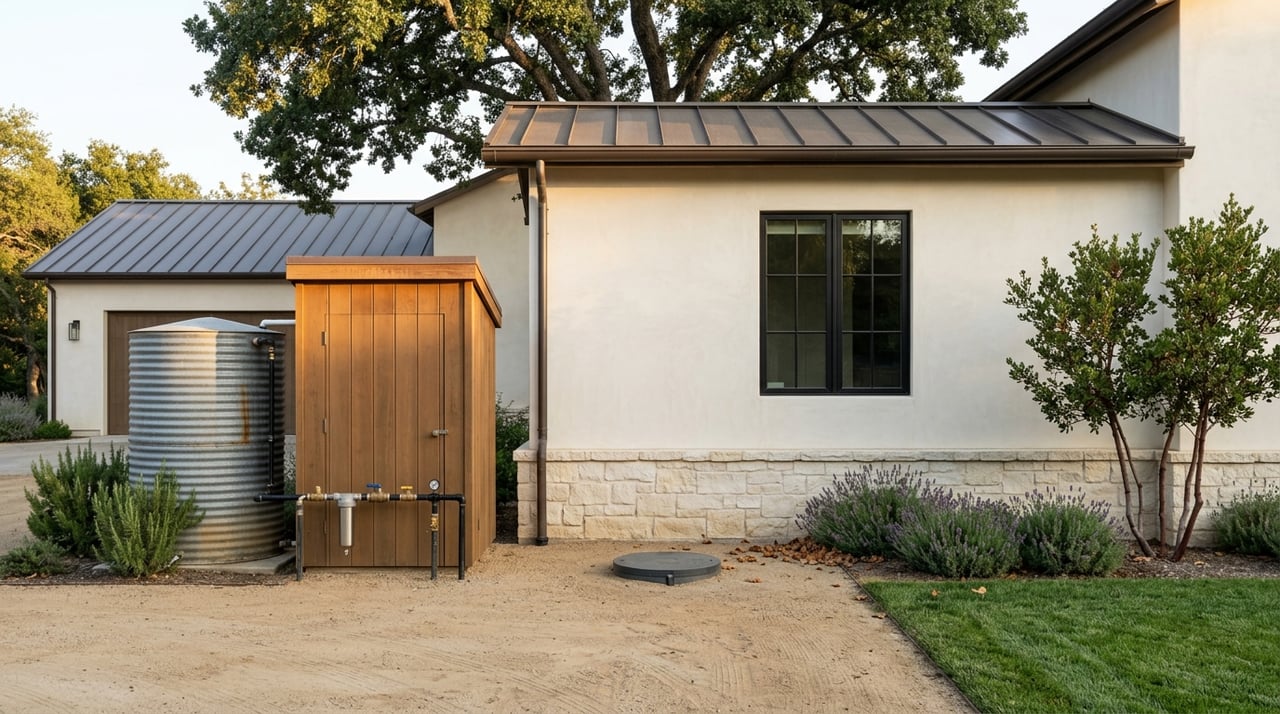
Wastewater is another major shift from condo living. If a Cloverdale acreage property uses an onsite wastewater treatment system, often called OWTS or septic, that system deserves close review.
Sonoma County requires an OWTS permit to install, repair, replace, modify, destroy, or abandon septic components. The county also notes that building permits for projects that add bedrooms, increase wastewater flow, or affect the septic replacement area can trigger septic review.
Many buyers think of septic as a maintenance item only. In reality, it can shape what you are able to add to the property later.
If you hope to build a guest structure, expand the home, or add an ADU, the septic reserve area may be just as important as the main system. Sonoma County’s OWTS guidance emphasizes that reserve replacement areas are critical to long-term development, and new development can require a new reserve area if the parcel becomes more than 50 percent encumbered.
Use these questions to frame your review:
For maintenance planning, EPA guidance recommends septic inspection every 1 to 3 years and pumping every 3 to 5 years. Systems with pumps, float switches, or other mechanical parts usually need annual inspection.
In Wine Country, the romance of a long driveway and oak-studded landscape has to be balanced with practical access. Fire clearance and access standards are not side notes. They can materially affect both daily ownership and future improvements.
Sonoma County fire guidance says defensible space is required out to 100 feet from structures. That includes a lean, clean, and green zone from 30 feet and a reduced fuels zone from 30 to 100 feet.
When you tour a property, do more than admire the setting. Walk the driveway, note the gate placement, and pay attention to bridges, slope, turnarounds, and clearance.
County guidance says gates must be at least 2 feet wider than the traffic lane, set at least 30 feet from the roadway, and positioned so a vehicle can stop without blocking traffic. If a parcel includes a bridge or similar driveway structure, Sonoma County also has permit and inspection standards, including at least 12 feet of unobstructed width for one-lane bridges with turnouts.
For a new acreage owner, vegetation management is not a one-time project. It is part of the annual rhythm of ownership.
That means budgeting for seasonal clearing, reviewing access routes regularly, and understanding that the landscape around a home has to be managed with safety in mind. A beautiful rural setting is best enjoyed when it is also functional and prepared.
One of the most common acreage assumptions is that a larger parcel automatically allows more structures. In practice, Sonoma County review is more layered.
The quantity, type, and size of ADUs can depend on existing structures, zoning, and site constraints. For ADUs on parcels over 1 acre in the State Responsibility Area, Sonoma County Fire Prevention says minimum setbacks are 30 feet from other buildings and property lines unless an approved exception applies, and apparatus access must reach within 150 feet of all four sides of the structure.
The better question is not “How many acres is it?” but “What can this land physically fit?” A workable parcel often needs space for the home site, well, septic primary area, septic reserve area, access, and defensible space, while still leaving room for any intended barn, workshop, or ADU.
That is why two parcels with similar acreage can offer very different possibilities. Shape, slope, setbacks, wastewater constraints, and access can all change what is realistic.
Acreage ownership usually comes with a few hidden line items that city buyers have not had to price before. Building a first-year framework before you make an offer can help you avoid surprises after closing.
Your budget may need room for:
Even basic well testing has a measurable cost. California’s domestic well guide estimates basic sample analysis at about $100 to $400.
Once you own the property, a steady routine is more useful than a reactive approach. A practical cadence can look like this:
EPA also recommends retesting a well after flooding, land disturbance, well repairs, or a noticeable change in taste, color, or odor. That kind of rhythm helps protect both the property and your long-term planning.
The most successful acreage buyers tend to be methodical. They understand the landscape, but they also verify the systems behind it.
Here is a practical checklist to carry into escrow:
This process may feel more detailed than a condo purchase, but it is also what gives acreage buyers a clearer understanding of what they are really buying.
It is easy to be drawn to a larger acreage number, especially if you are imagining more privacy, more flexibility, or more long-term upside. But in Cloverdale, the most useful parcel is often the one that supports your actual plans with fewer physical or regulatory conflicts.
A well-sized, well-configured parcel can be more valuable in practical terms than a larger property with difficult access, constrained septic areas, or limited room for future improvements. When you shift your focus from headline acreage to usable planning, you make a more informed buying decision.
If you are considering a move from a city condo to Cloverdale acreage, the right guidance can make that transition feel clear instead of overwhelming. For a discreet, informed conversation about land, estate properties, and the due diligence behind them, connect with Jamie Spratling.
Stay up to date on the latest real estate trends.