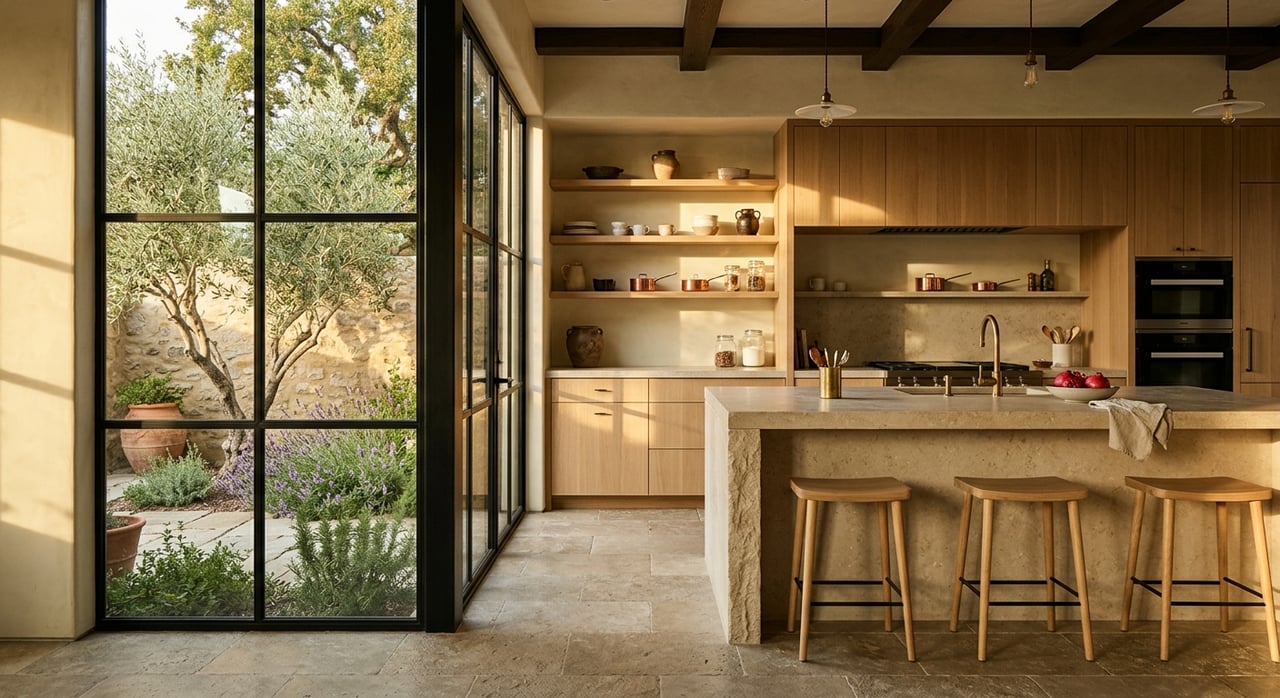
Designing A Modern Wine Country Home That Belongs In Healdsburg
June 4, 2026
June 4, 2026
What makes a modern wine country home feel right in Healdsburg, rather than simply new? In a place shaped by vineyards, wooded ridges, the Russian River, and a strong visual connection to the land, great design is about more than clean lines and glass walls. If you are planning, renovating, or searching for a home here, it helps to understand how local landscape, climate, and city guidance shape what truly belongs. Let’s dive in.
Healdsburg sits where the Russian River Valley, Dry Creek Valley, and Alexander Valley meet. The city’s planning area rises from about 100 to 430 feet above sea level, with scenic resources that include wooded hillsides, river corridors, and adjacent agricultural valleys.
That setting is the reason the most successful homes here tend to feel grounded in site rather than imposed on it. A modern house in Healdsburg usually works best when it acknowledges the land first, then the architecture second.
Healdsburg’s General Plan treats views of ridges, agriculture, and the river as protected public assets. In practical terms, that means a home should frame the landscape and sit quietly within it, not compete with it.
This is one reason low horizontal massing, carefully placed windows, and restrained forms often feel more natural here. You want the setting to remain the main event.
Oak woodland and mixed evergreen forest remain important parts of the local character, including areas near Fitch Mountain and Tayman Park. City guidance encourages the protection of these natural features, which makes tree preservation and sensitive site planning especially important.
For you as an owner or buyer, this can shape everything from a building footprint to driveway placement to where outdoor living spaces belong. Mature canopy and natural grade are not obstacles to design in Healdsburg. They are often the starting point.
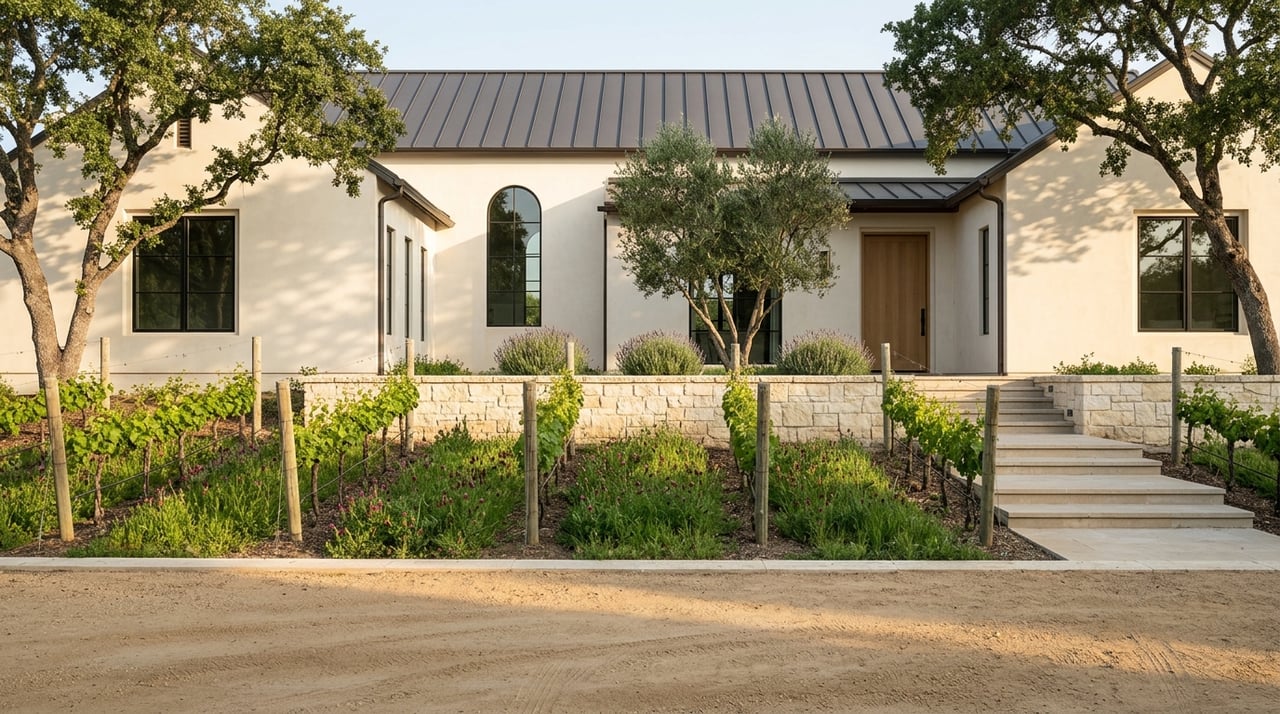
Modern design absolutely has a place in Healdsburg. But the city’s design guidance favors architecture that feels disciplined, compatible, and inspired by agrarian and vineyard character.
That means the best contemporary homes are rarely flashy. They are refined, measured, and closely tied to material, proportion, and setting.
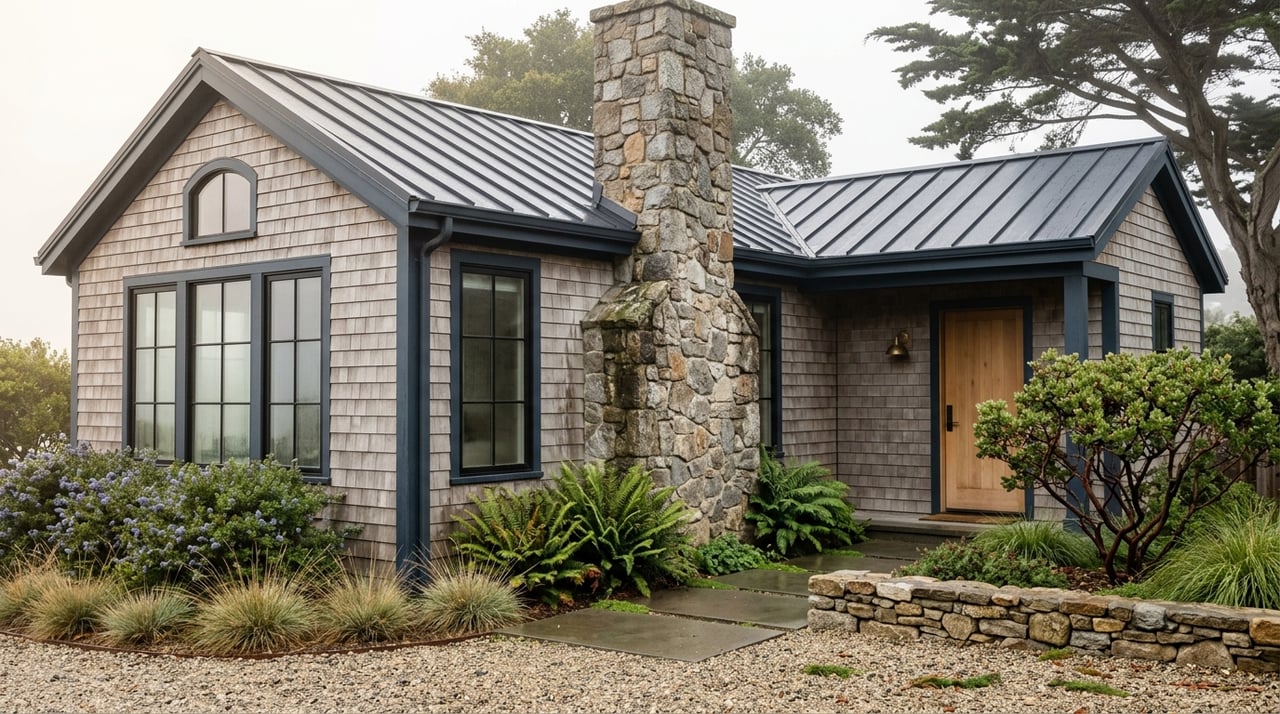
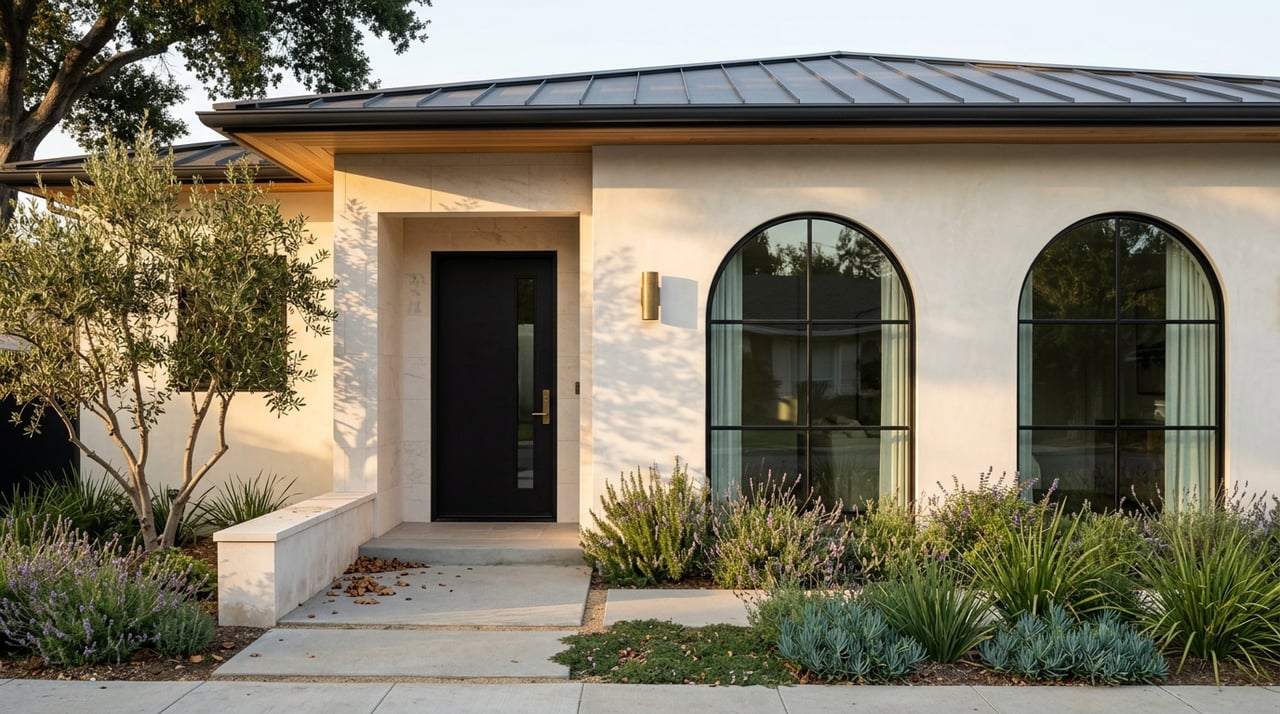
Healdsburg’s design guidelines call for variation in roof form, building modulation, and compatibility with surrounding development. They also point to earth tones and natural materials such as wood, stone, and stucco, with local landscape references that include redwood, oak, evergreen groundcover, and drought-tolerant planting.
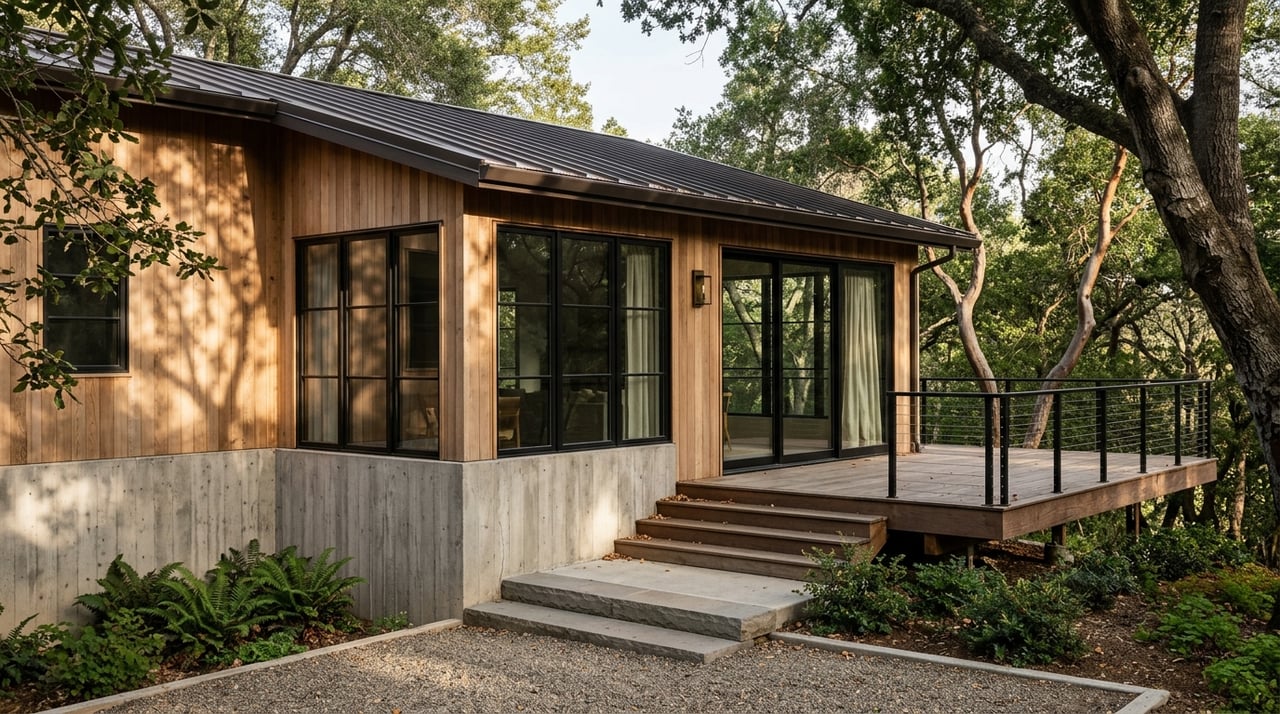
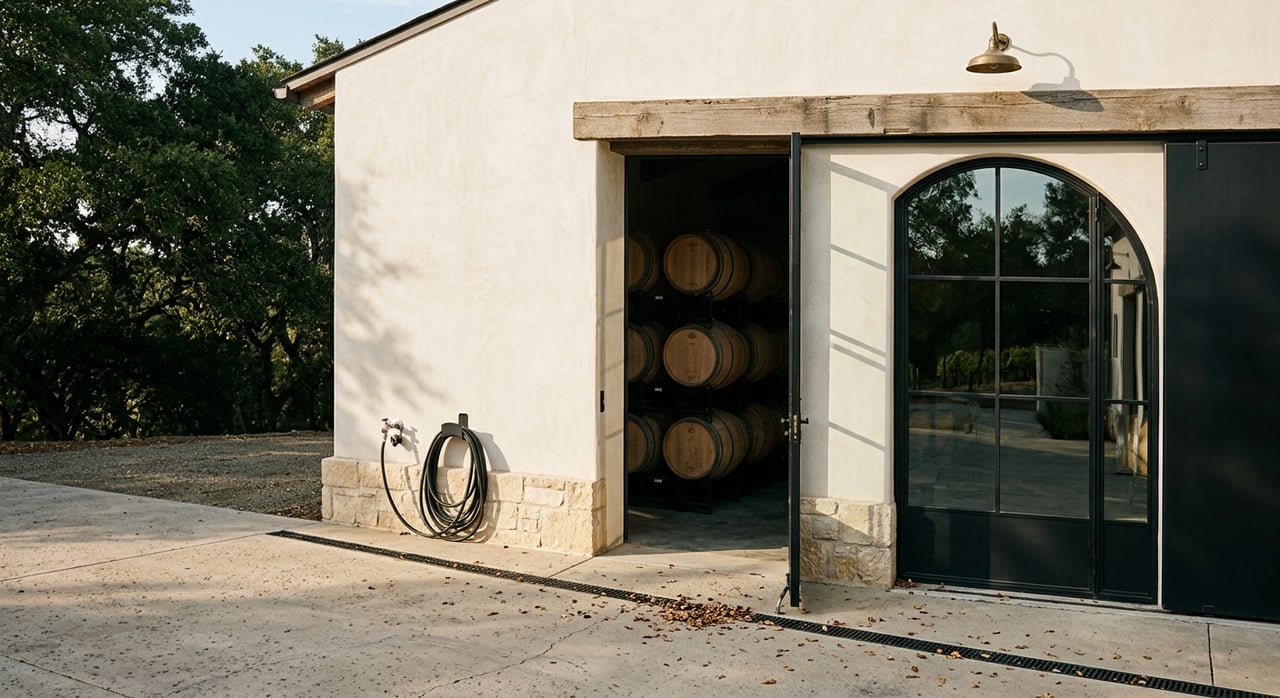
In practice, modern homes here often feel most at home when they borrow from barn-like volumes, pavilion forms, or low-profile compositions. Clean geometry can still feel warm and local when the scale and proportions are restrained.
A polished Healdsburg home does not need an excess of ornament. Natural materials already carry much of the visual richness.
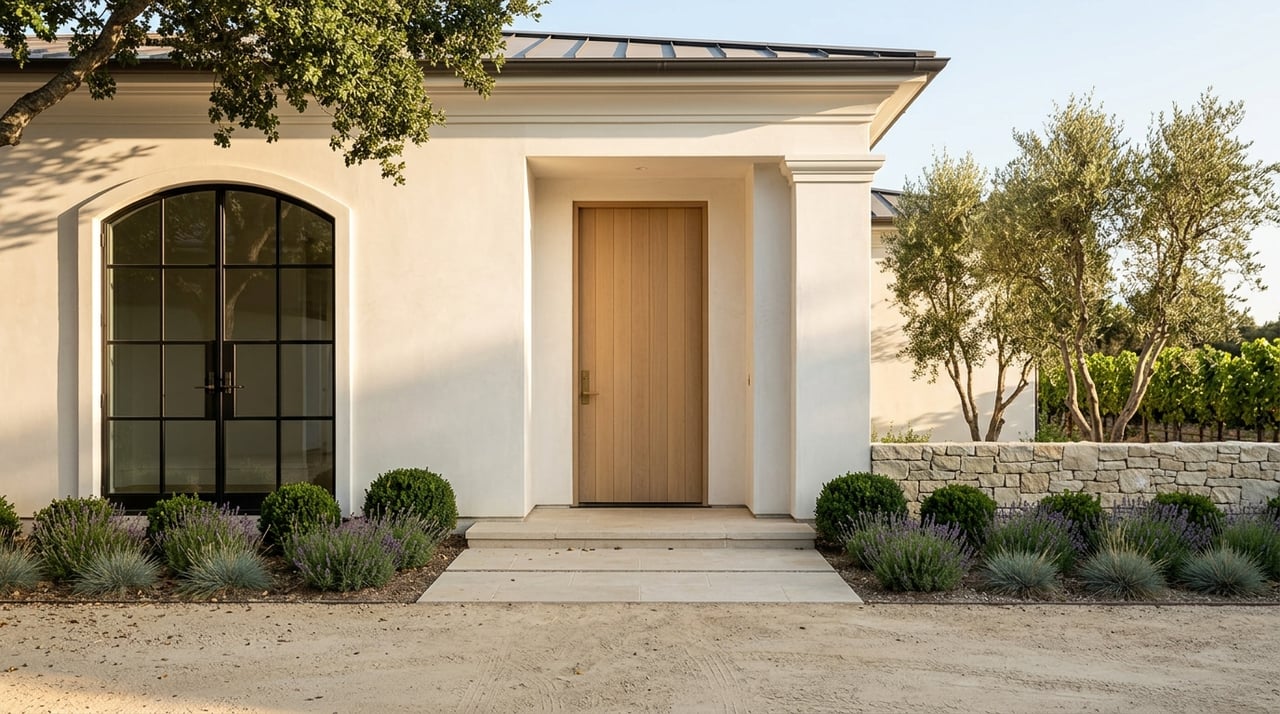
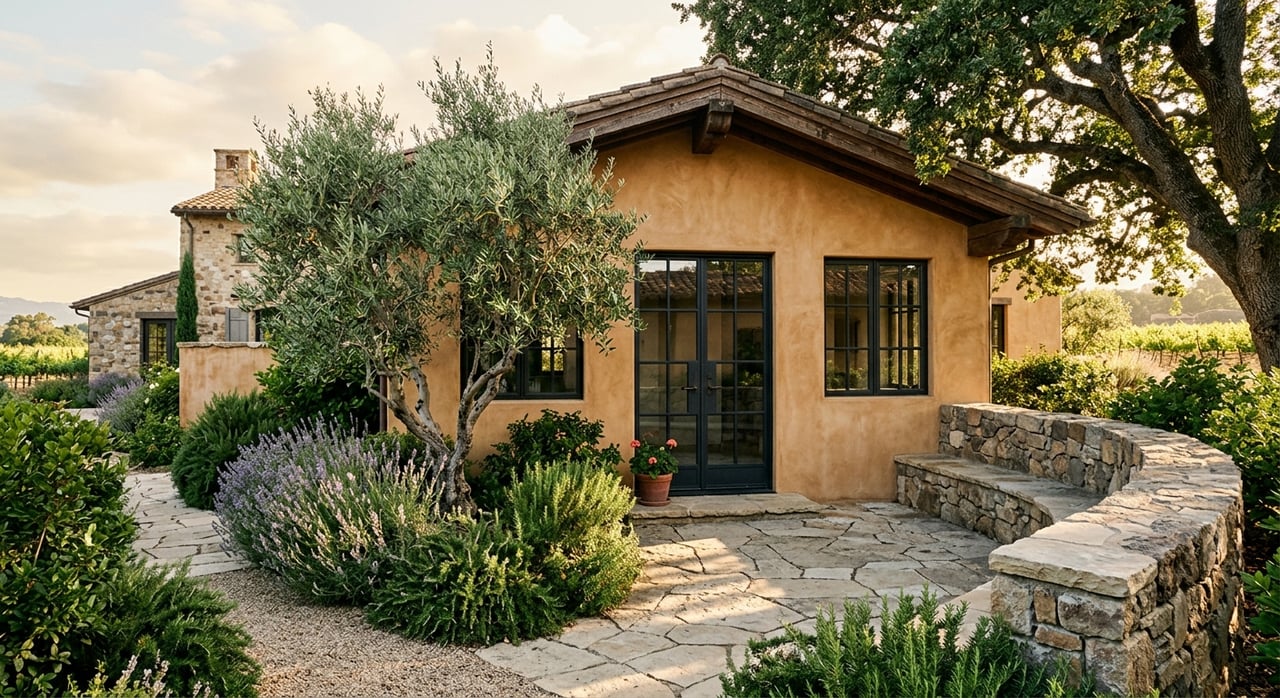
Wood cladding, stone walls, textured stucco, and muted palettes tend to age well in this setting. These choices also align with the city’s guidance to draw from the agrarian and vineyard character of the area.
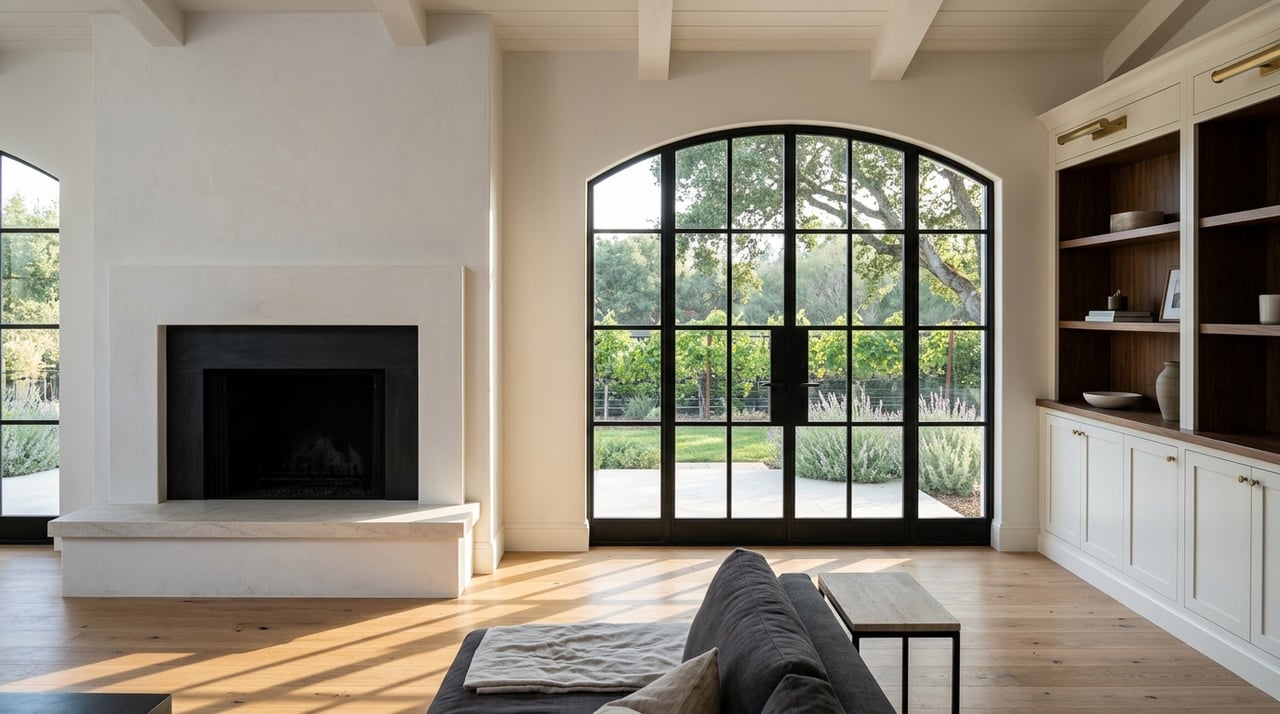
Glass is part of many beautiful modern homes, but in Healdsburg it tends to work best as a way to capture a vineyard edge, courtyard, ridgeline, or filtered tree canopy. An all-glass object can feel disconnected from the land if it dominates the site.
The stronger move is to use glazing as a framing device. Thoughtful placement creates calm, light-filled spaces while keeping the house visually subordinate to its surroundings.
Healdsburg has an inland Mediterranean-type climate, with wet winters and dry summers. The city’s planning documents note about 40 inches of annual rainfall in city proper, while mountain areas west of town can receive more than 60 inches.
That climate supports a style of living where indoor and outdoor spaces should feel connected, but also protected. The homes that age best here tend to handle both summer heat and winter rain with equal confidence.
Covered terraces, courtyards, and deep overhangs make a modern home more livable in Healdsburg. They create cooler outdoor spaces in the dry season and more usable transitions during wetter months.
These elements also help a house feel rooted in wine country living rather than dependent on a single indoor great room. In many of the most compelling homes, the outdoor room is just as carefully composed as the interior.
Reliable drainage should be part of the design from the beginning, especially on sloped sites or larger parcels. Wet winters can affect grading, hardscape design, and how outdoor spaces perform over time.
If you are evaluating a property or considering a remodel, drainage is one of those quiet details that often has an outsized impact on long-term enjoyment and maintenance.
Healdsburg now says about 80 percent of its water comes from the upper Russian River and about 20 percent from Dry Creek. That water profile, along with local landscape standards, makes drought-aware design more than a trend.
A well-designed landscape here should feel inevitable, as if it belongs to the site and climate rather than being layered on afterward.
The city encourages native and drought-tolerant planting, shade over pedestrian areas, and a coordinated landscape palette. It also supports rainwater capture and recycled water through its water-efficient landscape framework.
For your property, that means a strong landscape plan may rely less on decorative variety and more on rhythm, texture, and restraint. Repetition of regionally appropriate plantings usually feels more elegant than a patchwork approach.
Tree preservation is a recurring theme in Healdsburg’s design guidance. Mature trees provide shade, visual continuity, and a sense of permanence that new landscaping cannot replicate quickly.
When a house is designed around existing canopy, the result often feels more established from day one. That can matter for both daily enjoyment and future resale.
One hallmark of a well-resolved Healdsburg property is that the practical parts stay quiet. The city’s design review manual specifically calls for parking to be less visible from public streets, and its compatibility standards also extend to lighting, accessory structures, and service areas.
This matters because visual calm is part of the local character. The more the operational elements recede, the more the landscape and architecture can lead.
Garages, drive courts, mechanical areas, and storage zones should be planned carefully. Even a beautifully designed home can lose some of its sense of place if these elements dominate the public view.
A more fitting approach is to screen, recess, or reorient them so arrival feels composed and understated.
In Healdsburg, design is not just a private creative exercise. New work is guided by the Land Use Code, the General Plan, citywide design guidelines, and area plans, and the city asks owners to speak with planning staff early because many projects require a separate design review application.
If you are buying with plans to build or expand, this is an important part of due diligence. Early clarity can help you avoid redesign costs and timing surprises.
Healdsburg’s historic survey covered 339 properties and 6 districts, and the Johnson Street and Matheson Street historic districts are locally designated. In those areas, exterior changes, additions, new construction, major demolition, and some second-story proposals can trigger design review, a Historic Resource Evaluation, and Historic Committee review.
That does not mean thoughtful contemporary work is off the table. It means context, scale, and process matter more.
The General Plan requires visual analysis for development within 200 feet of major scenic ridgelines. Minor design review is also required for expansions of more than 500 square feet to single-family homes in designated scenic ridgeline corridors.
For hillside or highly visible sites, the visual impact of massing, materials, and placement can become a central part of approval. This makes early site strategy especially valuable.
In Healdsburg, durability is part of good design. A house that belongs here should respond not only to aesthetics, but also to wildfire exposure, water use, and flood conditions where relevant.
These choices matter for comfort today and for long-term value later.
Healdsburg notes that it has no areas in the very high fire severity zone, but its wildfire information also says more than 50 percent of critical facilities, about 30 percent of residential structures, and almost 25 percent of the population are in moderate or high fire severity zones. In Fire Hazard Severity Zones or Wildland-Urban Interface areas, new buildings must comply with Chapter 49 of the California Fire Code, and the city highlights ignition-resistant materials and defensible space.
For a modern home, that can influence roofing, cladding, vents, glazing strategies, and landscape spacing. The most sophisticated homes here are often the ones that pair visual restraint with practical hardening.
The city’s 2023 Local Hazard Mitigation Plan says the Russian River creates flood exposure near the south end of the city. Much of southwestern Healdsburg is subject to at least a 0.2 percent annual chance of flooding, and some areas, including parts of Badger Park and Rio Vista Estates, are in the 1 percent annual chance zone.
If you are evaluating a property near these areas, flood maps and site-specific due diligence should be part of the conversation early. Design decisions related to grading, access, and long-term resilience can follow from that first step.
The homes that tend to hold their appeal here are not always the most dramatic at first glance. They are the ones that sit lightly on the land, preserve canopy, use durable materials, and create a strong relationship between indoor rooms and the surrounding site.
In other words, a successful modern Healdsburg home usually feels contemporary in plan, agrarian in proportion, landscape-first in siting, and resilient in execution. That combination is what gives a house lasting relevance in this part of Sonoma.
If you are considering a design-forward purchase, a custom build, or a strategic renovation in Healdsburg, local context matters at every stage. For discreet guidance on distinctive wine country properties, connect with Jamie Spratling.
Stay up to date on the latest real estate trends.