Healdsburg Vineyard Estates Guide to Microclimates
June 18, 2026
June 18, 2026
Choosing a vineyard estate near Healdsburg can look simple on a map and feel entirely different on the ground. A parcel a few miles from town may sit in a cooler fog path, a warmer inland pocket, or on a hillside where slope and exposure change the rhythm of each day. If you are weighing a vineyard-capable property, this guide will help you read the landscape more clearly and understand how microclimate and siting choices shape long-term value, use, and daily experience. Let’s dive in.
Healdsburg’s baseline climate is mild and seasonally dry, with NOAA normals showing a mean daily maximum of 73.6°F, a mean daily minimum of 46.8°F, and annual precipitation of 42.81 inches. Most rainfall arrives from November through March, while June through September is notably dry. That broad picture is useful, but it does not tell the whole story of an individual estate.
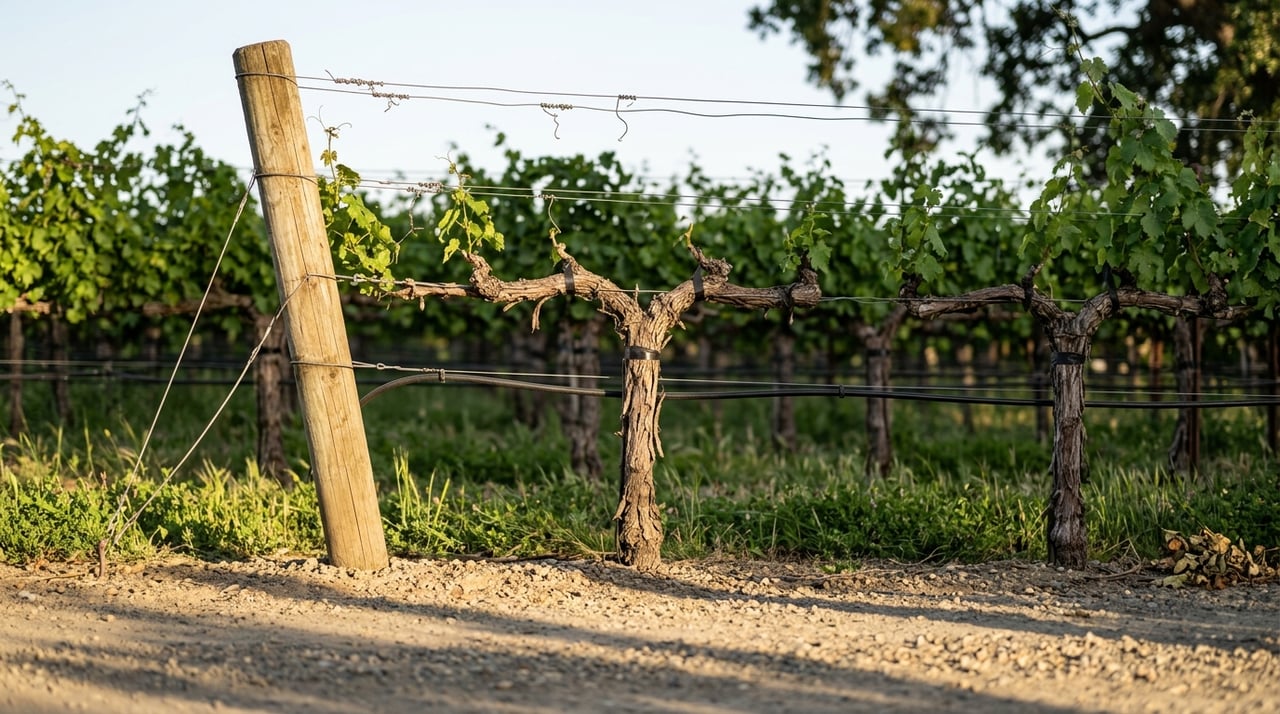
Across the Healdsburg area, low spots can trap cold air and moisture, while slope, aspect, and drainage can shift growing conditions within a single parcel. In practice, that means two properties with similar acreage may perform very differently depending on where the homesite sits, how the land falls away, and whether the site catches fog or afternoon heat.
For buyers, this is one of the defining features of the market. Healdsburg is an edge zone where several vineyard corridors meet, and the landscape changes quickly. A short drive can place you in a different climate pattern and a different appellation context.
The Russian River Valley side of Healdsburg is the cool-climate corridor. Its character is shaped by early-morning fog moving up the river and tributaries, with temperatures that can drop sharply as fog arrives and the growing season stretches longer than on warmer inland sites.
This corridor is widely associated with Pinot Noir and Chardonnay. If you are considering property in this area, pay close attention to how the parcel interacts with fog movement, morning light, and slower daytime warming. A site here may feel more temperate and layered, especially compared with inland alternatives.
West of Healdsburg, Dry Creek Valley offers a different pattern. It is generally warmer and longer-season than the main Russian River Valley, though still tempered by some fog influence, and it includes a mix of valley floor, benchland, and hillside vineyards.
This is often a corridor where the physical layout of the parcel matters as much as the address. Rocky, well-drained ground is a notable characteristic in the area, and the relationship between slope, access, and drainage can shape both vineyard utility and estate planning.
North and northeast of Healdsburg, Alexander Valley is the warmer inland choice. It is known for warmer overall growing conditions, with valley-floor and lower-slope vineyards and a landscape that often offers broader, more open building and vineyard envelopes.
For some buyers, the appeal is straightforward. You may trade some fog influence for greater heat accumulation, which creates a different agricultural and lifestyle setting. The feel is often more expansive, with a climate story that reads warmer and more inland.
Chalk Hill occupies an elevated pocket near the northeast side of the Russian River system. It is warmer than the greater Russian River Valley, but cooler than Alexander Valley and Dry Creek Valley, with much of the land ranging from about 200 to 1,330 feet.
This is a more site-specific hillside corridor, often defined by rolling or terraced terrain. If you are drawn to elevation and contour, Chalk Hill can present a highly nuanced siting discussion where exposure, access, and hillside planning deserve close review.
When evaluating a vineyard estate, elevation and cold-air drainage are often the first filters. Higher portions of a site usually offer better air and water drainage, while low areas are more likely to collect cold air and rainwater.
Slight to moderate slopes can help cold air move downhill, which may improve site performance. Steeper slopes can push drainage even further, but they may also increase erosion risk and make machinery access more difficult. In other words, the most dramatic view is not always the easiest working landscape.
This is where a parcel’s shape becomes more important than its brochure summary. A property may appear generous in scale, yet only certain portions may be especially workable for planting, circulation, or a future estate layout.
Aspect, or the direction a slope faces, can materially affect how a site lives and grows. South-facing areas receive more light and heat, while east-facing slopes tend to dry sooner in the day.
In warmer regions, north, east, and northeast exposures may help reduce heat load. In cooler settings, south-facing slopes can help gather warmth for ripening. Around Healdsburg, that means the same parcel can behave differently depending on whether it opens to a fog corridor, welcomes morning sun, or takes the full force of afternoon heat.
For a buyer, this is more than a vineyard issue. Aspect also shapes how outdoor spaces feel, how long moisture lingers, and how the estate transitions through the day and across the seasons.
A vineyard estate should be read as one system, not as separate parts. The house, driveway, terraces, drainage features, and planting areas all influence one another.
Homes absorb heat during the day and release it at night. Walls can create wind turbulence, roofs and downspouts can create wet spots where drainage is poor, and trees may either moderate temperature or block airflow. These are subtle details, but they matter when you are assessing how a property functions over time.
That is why thoughtful siting is so important. A beautifully placed home can complement the land, while a poorly placed one can interrupt airflow, create runoff problems, or limit future flexibility.
In the Healdsburg market, soil is not uniform from one corridor to the next or even across a single parcel. General soil behavior still applies: clay tends to hold water and drain more slowly, sandy soils drain quickly and may dry too fast, and loam sits between the two.
What matters here is local variation. Dry Creek is known for rocky, well-drained ground, Chalk Hill for volcanic ash soils, and Alexander Valley for alluvial valley-floor conditions. Those regional patterns are helpful, but they should not replace parcel-level investigation.
For buyers, the practical takeaway is simple. Do not assume soil character from the town name, the road name, or the surrounding view. The land itself needs to be read closely.
The most useful way to evaluate a Healdsburg vineyard estate is to focus less on mailing address and more on position. Fog, slope, drainage, and exposure often tell you more than a map pin.
As you compare properties, it helps to organize your thinking around a few core site questions:
This framework can bring clarity to a search that might otherwise feel driven by scenery alone. In vineyard real estate, beauty and performance often overlap, but they are not always the same thing.
If you are searching in Healdsburg, the right estate is rarely defined by one feature alone. It is the relationship between microclimate, topography, homesite placement, and intended use that creates the strongest fit.
A cooler Russian River Valley parcel may appeal if you are drawn to fog influence and a longer season feel. A Dry Creek property may stand out if drainage, exposure, and workable slope are central to your goals. Alexander Valley may suit a buyer looking for a warmer inland setting and broader land envelopes, while Chalk Hill can reward those who value elevation and hillside character.
The key is to look past broad labels and study the land with care. In a market as nuanced as Healdsburg, small siting differences can shape both daily enjoyment and long-range property potential.
If you are considering a vineyard estate in Healdsburg or the broader Wine Country market, Jamie Spratling offers discreet, high-touch guidance grounded in the landscape, the property narrative, and the complexities that define exceptional land.
Stay up to date on the latest real estate trends.